
What Are Biomass Briquettes And How Do They Work?
What Are Biomass Briquettes And How Do They Work?
As industries across India search for cleaner and more affordable fuel options, one energy source is steadily gaining attention: biomass briquettes.
Made from agricultural residue and other organic materials, biomass briquettes are helping businesses reduce fuel costs, make better use of available resources, and decrease their dependence on traditional fossil fuels. From power plants and cement manufacturers to food processing units and paper mills, industries are increasingly turning to biomass briquettes as a practical fuel alternative.
But what exactly are biomass briquettes, and why are so many industries choosing them?
Let’s understand.
What Are Biomass Briquettes?
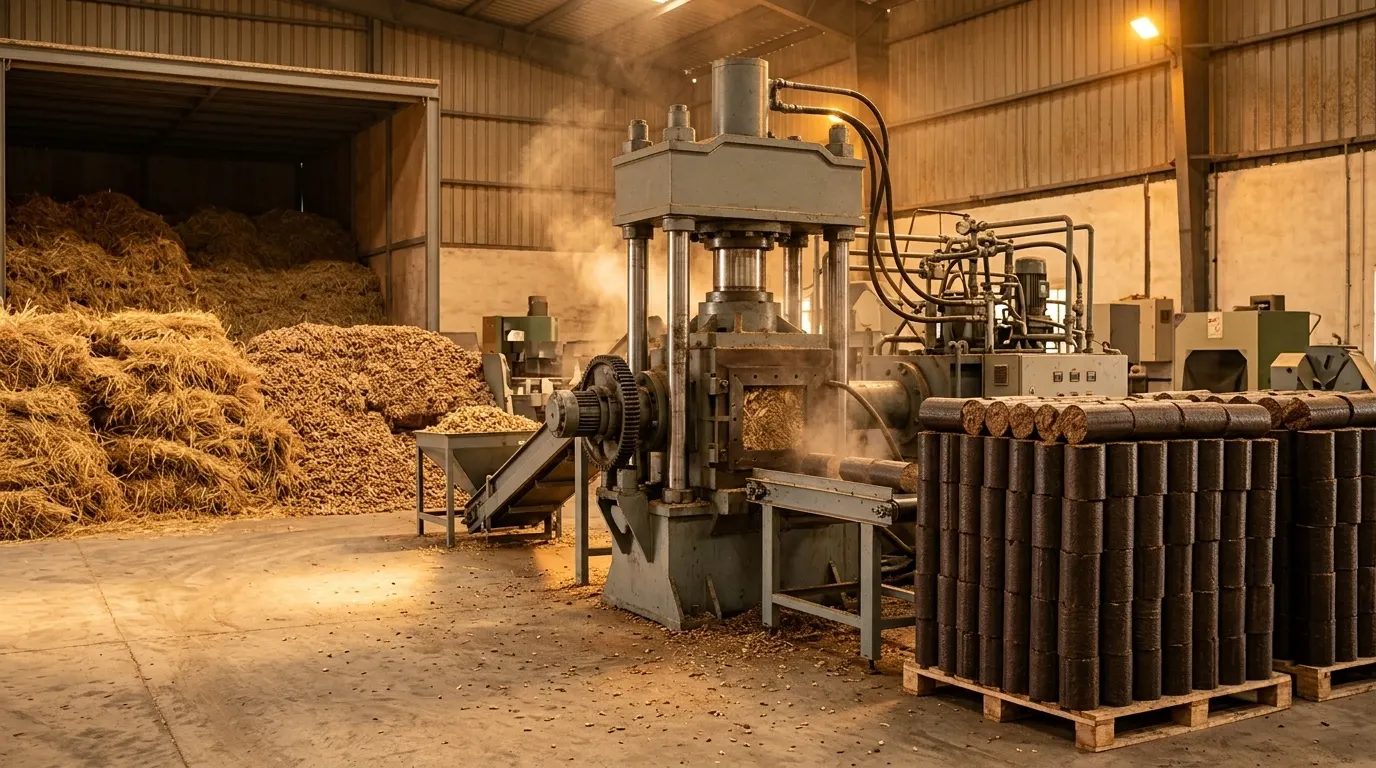
Biomass briquettes are solid fuel blocks made by compressing agricultural waste and biomass materials under high pressure.
Instead of allowing crop residue to go unused or be discarded, these materials are collected, processed, and converted into dense fuel blocks that can be used for heating and energy generation.
Common raw materials used to manufacture biomass briquettes include:
- Paddy residue
- Mustard residue
- Groundnut shells
- Sawdust
- Agricultural waste
- Other biomass materials
The result is a compact fuel source that is easy to store, transport, and use in industrial heating systems.
Why Were Biomass Briquettes Introduced?
For decades, industries relied heavily on coal, furnace oil, diesel, and LPG to meet their energy needs.
While these fuels continue to play an important role, they also come with several challenges:
- Rising fuel costs
- Dependence on finite resources
- Environmental concerns
- Supply fluctuations
- Higher emissions
At the same time, large quantities of agricultural residue were being generated every year across India.
This created an opportunity.
Instead of viewing agricultural residue as waste, it could be transformed into a valuable energy source. Biomass briquettes emerged as a way to bridge the gap between agricultural by-products and industrial fuel requirements.
How Are Biomass Briquettes Made?
The manufacturing process is straightforward but carefully controlled to ensure consistent quality.
Step 1: Collection Of Raw Materials
The process begins with collecting biomass materials such as paddy residue, mustard residue, groundnut shells, and sawdust.
These materials are sourced from farms, processing units, and other biomass suppliers.
Step 2: Processing And Preparation
The collected material is cleaned and prepared for manufacturing.
Any unwanted impurities are removed, and the moisture level is adjusted to improve fuel quality and combustion performance.
Step 3: Compression
The prepared biomass is compressed under high pressure using specialized machinery.
This process binds the material together into dense blocks without requiring harmful chemicals or additives.
Step 4: Shaping And Cooling
The compressed biomass is shaped into briquettes and allowed to stabilize before packaging and distribution.
The finished product is uniform, easy to handle, and ready for industrial use.
How Do Biomass Briquettes Work?
The concept is simple.
Biomass briquettes are burned in industrial boilers, furnaces, and heating systems to generate heat energy.
When ignited, the briquettes release stored energy that can be used for:
- Steam generation
- Industrial heating
- Process heating
- Thermal energy applications
- Manufacturing operations
Because briquettes are dense and uniform, they provide a consistent fuel source that supports efficient industrial operations.
Where Are Biomass Briquettes Used?
Today, biomass briquettes are used across a wide range of industries.
Some common applications include:
Power Generation
Power plants use biomass fuel as part of their energy production processes.
Cement Manufacturing
Cement plants require large amounts of thermal energy, making biomass briquettes a practical fuel option.
Food Processing
Food manufacturing facilities use biomass fuel for heating and processing operations.
Dairy And Beverage Industries
Many dairy and beverage plants rely on steam and thermal energy systems that can utilize biomass fuel.
Textile Manufacturing
Textile units use boilers and heating systems where biomass briquettes can be effectively applied.
Paper Mills
Paper manufacturing requires continuous energy input, making biomass fuel an attractive alternative.
Pharmaceutical Manufacturing
Various heating applications within pharmaceutical facilities can benefit from reliable biomass fuel supply.
Why Are Industries Switching To Biomass Briquettes?
There is no single reason.
Instead, several factors are driving this shift.
Better Use Of Agricultural Resources
Biomass briquettes create value from materials that might otherwise remain underutilized.
Reliable Fuel Supply
With proper sourcing and supply chain management, biomass fuel can provide dependable support for industrial operations.
Easier Handling And Storage
Compared to loose agricultural residue, briquettes are compact and easier to transport, store, and manage.
Support For Sustainability Goals
Many businesses today are actively looking for ways to improve resource efficiency and adopt more responsible operating practices.
Biomass briquettes help support these efforts by utilizing renewable biomass resources.
Growing Focus On Renewable Energy
Across India, industries are exploring energy options that align with long-term sustainability objectives. Biomass fuel is increasingly becoming part of that conversation.
The Growing Future Of Biomass Energy In India
India generates enormous quantities of agricultural residue every year.
What was once viewed simply as crop waste is now being recognized as a valuable resource with significant energy potential.
As industries continue searching for dependable alternatives to conventional fuels, biomass briquettes are expected to play an increasingly important role in the country’s energy landscape.
The combination of agricultural abundance, industrial demand, and growing awareness around renewable energy is creating new opportunities for businesses, suppliers, and farmers alike.
Supporting India's Transition To Cleaner Energy
At Serra Energies Private Limited, we believe agricultural residue deserves a second life.
Through biomass fuel manufacturing, biomass fuel trading, agricultural waste procurement, and supply chain management, we help transform paddy residue, mustard residue, groundnut waste, and sawdust into high-quality biomass briquettes and pellets for industries across India.
Whether you are looking for a reliable biomass fuel supplier, seeking renewable energy alternatives for your operations, or interested in supplying agricultural residue, our team is ready to help.
Let’s Turn Agricultural Waste Into Opportunity
Discover how biomass fuel can support your business while contributing to a more sustainable future.
Contact Serra Energies today to discuss your biomass fuel requirements, partnership opportunities, or agricultural waste supply needs.