
Biomass Pellets Vs Coal: Which Is Better?
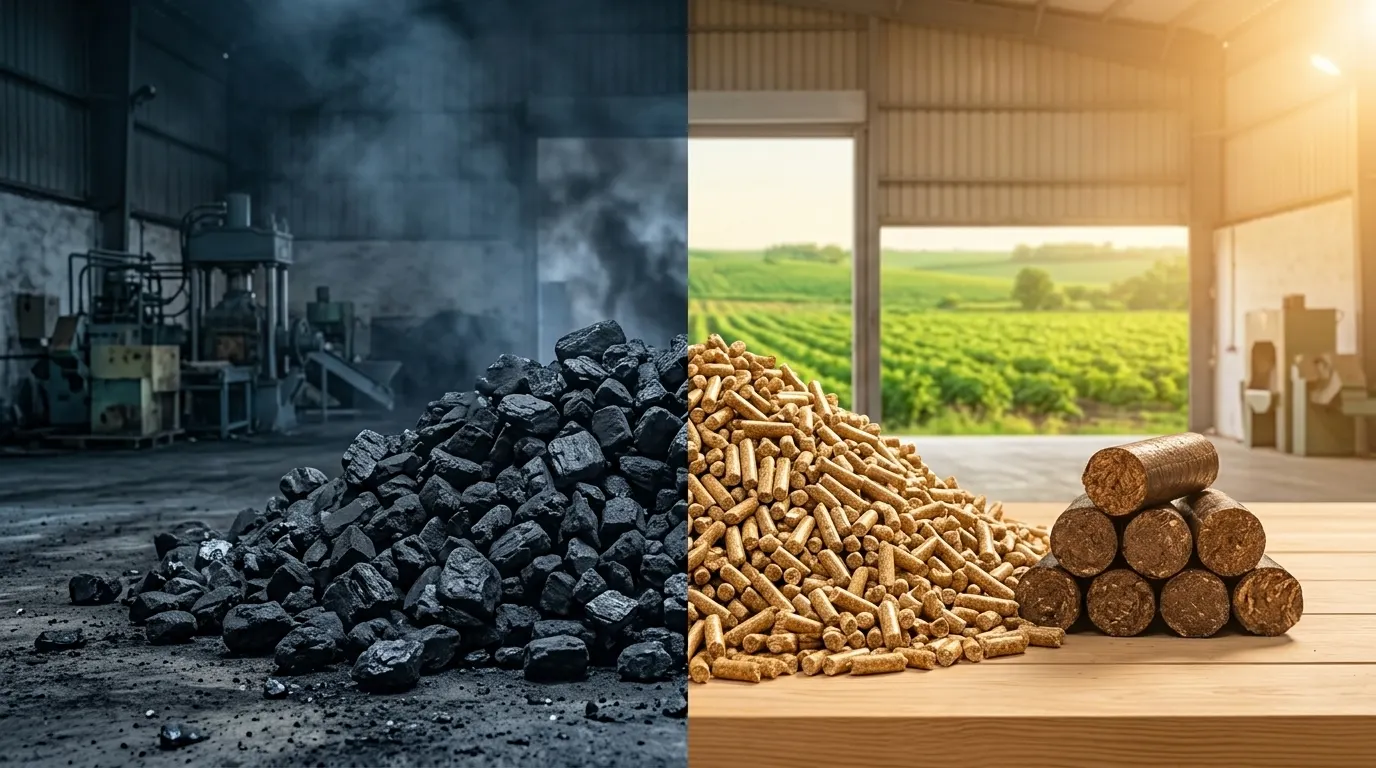
Biomass Pellets Vs Coal: Which Is Better?
For decades, coal has been one of the most widely used fuels in industrial operations. From power generation and cement manufacturing to food processing and paper production, coal has powered factories, plants, and industries across the country.
But today, the conversation is changing.
Industries are facing increasing pressure to reduce costs, improve efficiency, and move towards cleaner energy sources. At the same time, businesses are becoming more aware of the long-term impact of fuel choices on operations, supply chains, and sustainability goals.
As a result, many companies are now asking an important question:
Is coal still the best option, or is it time to switch to biomass pellets?
The answer depends on what your business values most. Let’s compare both fuels in a practical way.
Understanding The Difference
Coal is a fossil fuel that has been formed underground over millions of years. It is mined, processed, transported, and then used for heat and energy generation.
Biomass pellets, on the other hand, are manufactured using agricultural residue and biomass materials such as paddy residue, mustard residue, groundnut waste, and sawdust. These materials are compressed into small, dense pellets that can be used in industrial heating systems and boilers.
Both fuels generate heat.
But the way they are sourced, used, and valued is very different.
The Cost Factor
When industries evaluate fuel options, cost is usually the first thing they consider.
At first glance, coal may appear familiar and predictable. However, coal prices are influenced by mining costs, transportation expenses, market fluctuations, regulations, and supply challenges.
Biomass pellets offer a different approach.
Since they are produced from locally available agricultural residue, businesses often benefit from a more stable and accessible fuel source. Depending on the application and location, biomass pellets can provide significant savings compared to traditional fossil fuels.
But looking only at the fuel price can be misleading.
Smart businesses evaluate the total value of a fuel—not just what it costs today, but what it may cost tomorrow.
Efficiency Matters
A fuel is only valuable if it performs consistently.
Industrial operations require reliable heat generation, stable combustion, and predictable performance.
Modern biomass pellets are manufactured to maintain consistent size, density, and moisture levels. This helps improve fuel handling, storage, and combustion efficiency.
Because pellets are uniform, industries often find them easier to feed into boilers and heating systems compared to loose biomass materials.
Coal remains a powerful fuel source, but it can vary significantly in quality depending on its grade and source. Variations in ash content and combustion characteristics can affect operational performance.
The goal is not simply to burn fuel.
The goal is to generate reliable energy with minimum disruption.
The Environmental Question
This is where the difference becomes impossible to ignore.
Coal is a finite resource. Once extracted and consumed, it cannot be replaced within a human lifetime.
Biomass pellets are produced from renewable materials that are generated every agricultural season.
Every year, farms across India produce enormous quantities of agricultural residue. Instead of allowing these materials to go unused, they can be converted into a valuable source of energy.
This creates a cycle of reuse rather than depletion.
The result is a fuel system that makes better use of existing resources while supporting a more sustainable energy future.
Storage And Handling
Fuel management is often overlooked until it becomes a problem.
Storage, transportation, handling, and logistics all affect operational efficiency.
Biomass pellets are compact, dense, and easy to transport. Their uniform shape makes storage more organized and predictable.
Coal can require significant storage space and handling infrastructure depending on the scale of operations.
For industries seeking streamlined fuel management, pellets often offer practical advantages.
Supply Chain Reliability
A fuel source is only useful if it is available when you need it.
Industrial downtime caused by fuel shortages can be costly.
As demand for renewable energy continues to grow, biomass supply networks across India are becoming stronger and more organized. Manufacturers, traders, procurement specialists, and logistics providers are building systems designed to support long-term industrial demand.
This growing ecosystem is making biomass pellets increasingly accessible across multiple industries and regions.
Businesses are no longer asking whether biomass is available.
They are asking whether they can afford to ignore it.
Looking Beyond Today's Numbers
Many fuel comparisons focus only on immediate costs.
But successful businesses think beyond the next month or the next quarter.
They ask bigger questions:
- Is this fuel reliable?
- Can it support future growth?
- Does it align with changing industry expectations?
- Will it remain practical in the years ahead?
The energy choices made today can influence operating costs, sustainability goals, supply chain resilience, and business reputation for years to come.
This is why more companies are evaluating biomass pellets not simply as an alternative fuel, but as a long-term business decision.
So, Which Is Better?
There is no single answer for every industry.
Coal continues to play an important role in many sectors.
However, biomass pellets are steadily proving that renewable energy can be practical, reliable, and commercially viable.
For industries seeking a fuel source that combines performance, resource efficiency, and long-term value, biomass pellets have become an increasingly attractive option.
The real question may no longer be whether biomass pellets can compete with coal.
The real question is how quickly industries can benefit from making the transition.
Helping Industries Move Towards Smarter Fuel Choices
At Serra Energies Private Limited, we work with industries across India that are exploring reliable alternatives to conventional fuels.
Through biomass fuel manufacturing, trading, agricultural waste procurement, and supply chain management, we convert paddy residue, mustard residue, groundnut waste, and sawdust into high-quality biomass pellets and briquettes designed for industrial use.
Our focus is simple: provide dependable fuel solutions that help businesses operate efficiently while making better use of available resources.
As the demand for renewable energy continues to grow, industries need partners who understand both fuel requirements and supply reliability.
Let's Build A More Sustainable Energy Future
Whether you’re evaluating biomass fuel for the first time or looking to strengthen your existing fuel supply strategy, Serra Energies is here to help you explore the possibilities.
Connect with our team to learn how biomass pellets can support your operations, energy goals, and long-term growth.