
How Agricultural Waste Becomes Renewable Energy
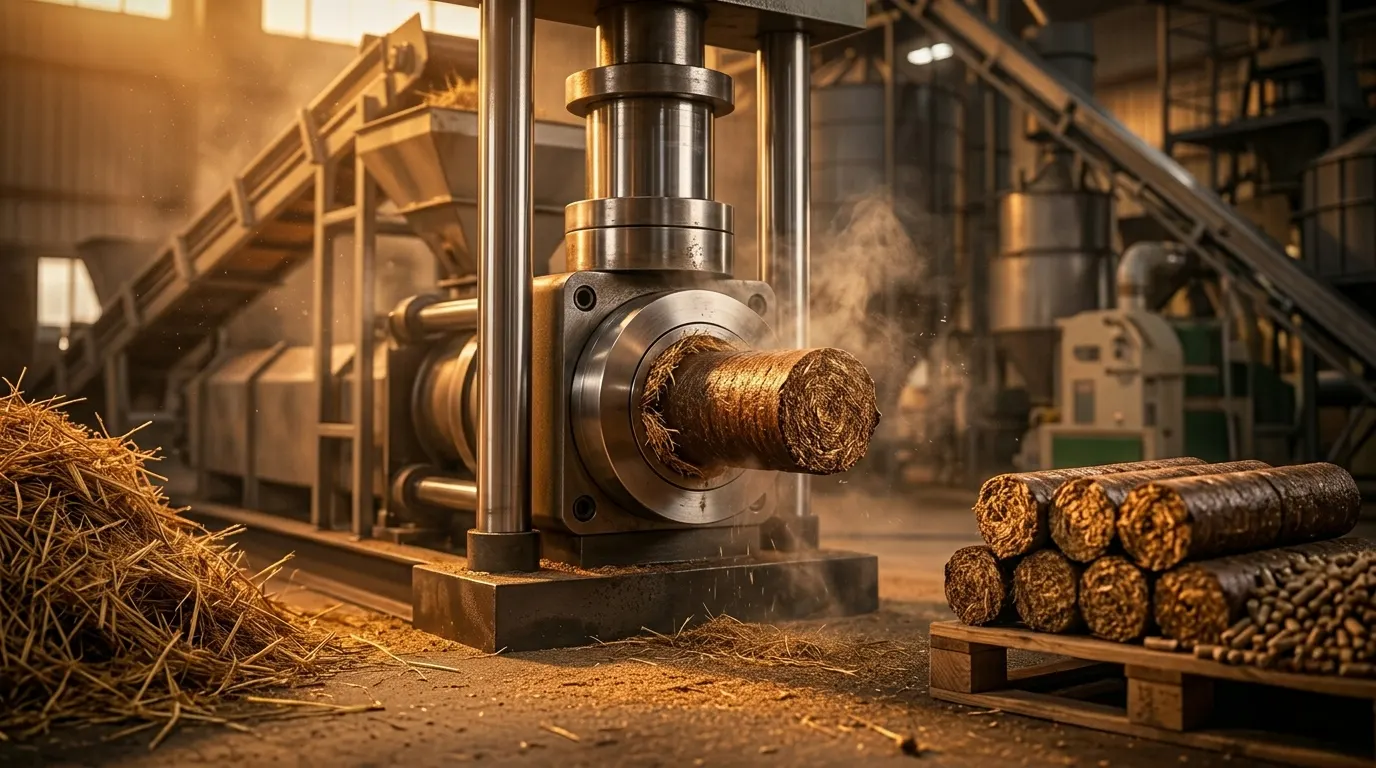
A Step-By-Step Look At The Journey From Crop Residue To Industrial Fuel
Every harvest season, millions of tonnes of agricultural residue are left behind in fields across India. Paddy straw, mustard residue, groundnut shells, and sawdust are often treated as waste with little value.
For years, much of this material was either burned, dumped, or left to decompose. While these methods may seem convenient, they create serious challenges. Stubble burning contributes to air pollution, valuable resources go unused, and farmers miss out on additional income opportunities.
Today, things are changing.
What was once considered waste is now becoming one of India’s most promising renewable energy sources.
Biomass fuel is helping industries reduce their dependence on fossil fuels while creating value from agricultural residue. But how exactly does crop waste become industrial fuel?
Let’s look at the journey step by step.
Step 1: Agricultural Residue Is Collected
The process begins in farms, agricultural markets, and wood-processing units.
Materials commonly used for biomass fuel include:
- Paddy residue
- Mustard residue
- Groundnut shells
- Sawdust
- Other agricultural by-products
These materials contain stored energy from the sun. During their growth cycle, plants absorb sunlight and store that energy within their structure. Biomass fuel simply unlocks and utilizes that stored energy.
Instead of allowing these materials to go to waste, they are collected and transported for processing.
This is where the renewable energy journey begins.
Step 2: Sorting And Quality Inspection
Not all agricultural waste is suitable for fuel production.
Before processing starts, the collected material is carefully inspected and sorted.
Unwanted materials such as:
- Stones
- Plastic
- Metal pieces
- Excess dirt
- Foreign particles
are removed to ensure fuel quality.
Quality control at this stage is extremely important because cleaner raw materials produce better briquettes and pellets with more consistent performance.
The goal is simple:
Create a fuel product that industries can rely on every day.
Step 3: Drying The Biomass
Fresh agricultural residue often contains moisture.
Too much moisture can reduce fuel efficiency and affect combustion performance.
To solve this, the biomass is dried until it reaches an ideal moisture level.
Proper drying helps:
- Improve combustion efficiency
- Increase heat output
- Reduce smoke generation
- Improve storage life
- Enhance product quality
This stage plays a major role in producing a high-performance biomass fuel.
Step 4: Size Reduction And Processing
After drying, the biomass is processed into smaller particles.
Large pieces of agricultural residue are broken down into a uniform size.
This helps create consistency throughout the manufacturing process.
Uniform particle size ensures:
- Better compression
- Higher fuel density
- Consistent burning
- Improved product quality
The processed biomass is now ready to be transformed into fuel.
Step 5: Compression Into Briquettes Or Pellets
This is where the real transformation happens.
Using specialized machinery, the prepared biomass is compressed under high pressure.
No harmful chemicals are required.
The natural properties of the biomass help bind the material together during compression.
Depending on the process, the final product becomes either:
Biomass Briquettes
These are larger, dense blocks of compressed biomass.
They are widely used in:
- Industrial boilers
- Furnaces
- Steam generation systems
Biomass Pellets
These are smaller cylindrical fuel units.
They are commonly used in:
- Industrial heating systems
- Biomass burners
- Energy generation applications
Both products are designed to provide efficient and reliable energy.
Step 6: Cooling And Stabilization
Freshly manufactured briquettes and pellets are warm due to the pressure generated during production.
Before packaging and transportation, they are cooled and stabilized.
This step helps:
- Improve durability
- Reduce breakage
- Enhance storage performance
- Maintain product quality
Proper cooling ensures the fuel remains strong and usable throughout the supply chain.
Step 7: Storage And Distribution
Once ready, biomass briquettes and pellets are stored and prepared for dispatch.
They are then supplied to industries across India.
These fuels are used by sectors such as:
- Power generation
- Cement manufacturing
- Food processing
- Dairy industries
- Beverage production
- Textile manufacturing
- Paper mills
- Pharmaceutical companies
For many businesses, biomass fuel has become a practical alternative to coal, furnace oil, and LPG.
Step 8: Energy Generation
The final stage is where biomass fuel delivers its value.
Briquettes and pellets are used in boilers, furnaces, and industrial heating systems.
As they burn, they release energy that powers industrial operations.
This energy is used for:
- Steam generation
- Process heating
- Manufacturing operations
- Thermal applications
The result is dependable energy produced from materials that were once considered waste.
Why This Process Matters
The journey from agricultural residue to renewable energy creates benefits at every level.
For Farmers
Agricultural waste gains economic value instead of becoming a disposal problem.
For Industries
Businesses gain access to a cost-effective and renewable fuel source.
For The Environment
Less agricultural waste is burned in fields, helping reduce air pollution and improve resource utilization.
For India
Renewable energy sources help strengthen long-term energy security while reducing dependence on conventional fossil fuels.
This is why biomass energy is becoming an important part of India’s transition toward cleaner and more sustainable industrial growth.
Turning Waste Into Opportunity With Serra Energies
At Serra Energies Private Limited, we believe agricultural residue should never be seen as waste.
Through biomass briquette manufacturing, biomass pellet production, biomass fuel trading, agricultural waste procurement, and supply chain management, we help convert paddy residue, mustard residue, groundnut shells, and sawdust into valuable renewable energy products.
Our mission is simple: connect farmers, industries, and sustainable energy through solutions that create value for everyone involved.
Whether you are looking to procure biomass fuel, partner with a reliable supplier, or supply agricultural residue for processing, Serra Energies is committed to helping build a cleaner and more resource-efficient future.
Ready to turn agricultural waste into energy?
Connect with Serra Energies today and be part of India’s growing renewable energy journey.